Grip on Transport – Your own logistics Control Tower

Achieve More with Efficient Transport Tenders

Make smarter choices, save costs, and boost performance with expert-led tenders!

Table of content

Transinnovate offers solutions for a logistics control tower, both the necessary software system and the service. Because it is a buzzword, we explain on this page why a control tower is useful, what is needed, and how Transinnovate can help shippers with this. If you want to discuss with us what a control tower can bring you, please feel free to contact us.

Why a Control Tower?

If your company trades or produces physical goods, transport is essential for your business operations. It directly affects your commercial margin and has a direct impact on your customer satisfaction. After all, if there are late deliveries, delays, or transport damage, your customer calls you, not your carrier.

Companies often focus on their primary process when looking for improvements, and transport is an overlooked aspect. “It’s running, and we have other projects now” is a common answer. A lack of overview and current data is often the cause of this lack of action. If there is no data to steer on, then steering becomes very difficult.

Experience shows that a control tower can result in a 10 to 15% cost savings on transport. You can also address quality problems with transport in a more structured and proactive way, instead of relying on gut feelings. Current data from your transport operation can also signal problems elsewhere in your process. An increase in the number of urgent shipments, for example, may be a sign of production problems. Companies can benefit greatly from a control tower.

What is a Control Tower and What is Needed?

The term control tower is derived from air traffic control in a ‘control tower’ that efficiently (and safely) handles air traffic with a central overview. It revolves around 1) having information and data, 2) the ability to steer directly, and 3) tight processes and clear responsibilities.

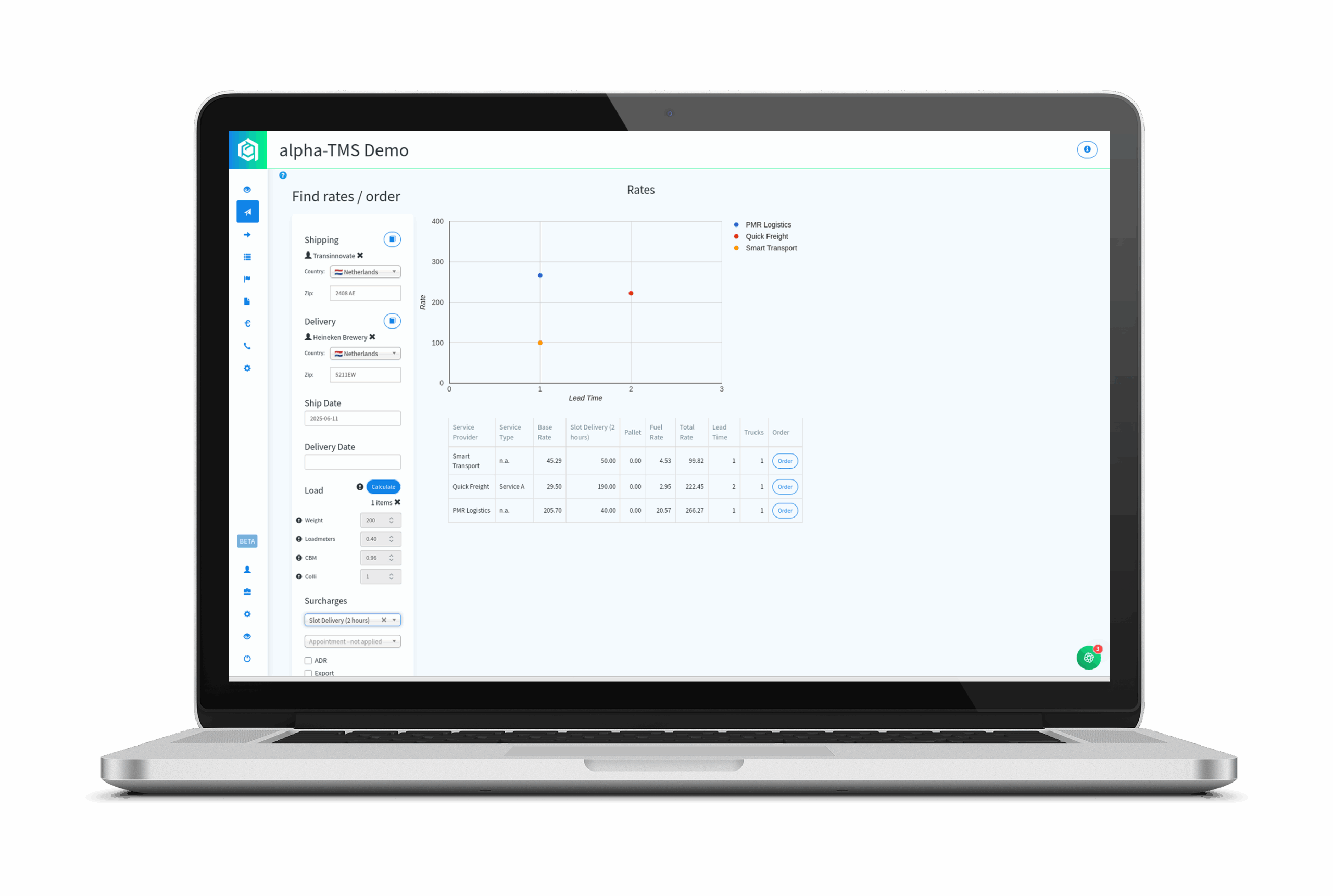
Information: It is clear that in the management of aircraft, having up-to-date and correct information is essential to life. Although there is usually no literal life or death situation in transportation, having up-to-date, complete, and correct data is a must if you want to manage carriers effectively. However, many shippers accept that information is not up-to-date (monthly reports and carrier invoices are issued afterwards) and not integrated. It is often spread across their own ERP system (customer orders) and transport orders in email or the portal of one or more carriers. A good control tower ensures that there is up-to-date and complete data on customer orders, transport orders, costs, and quality in one central location. A Transport Management System (TMS) can help shippers with this. A TMS provides much better data than a (often rigid and limited) transportation module in an ERP system, which often only focuses on sending out a transport order. This can be detailed data or monthly reports that combine information from multiple carriers in one clear dashboard or report.
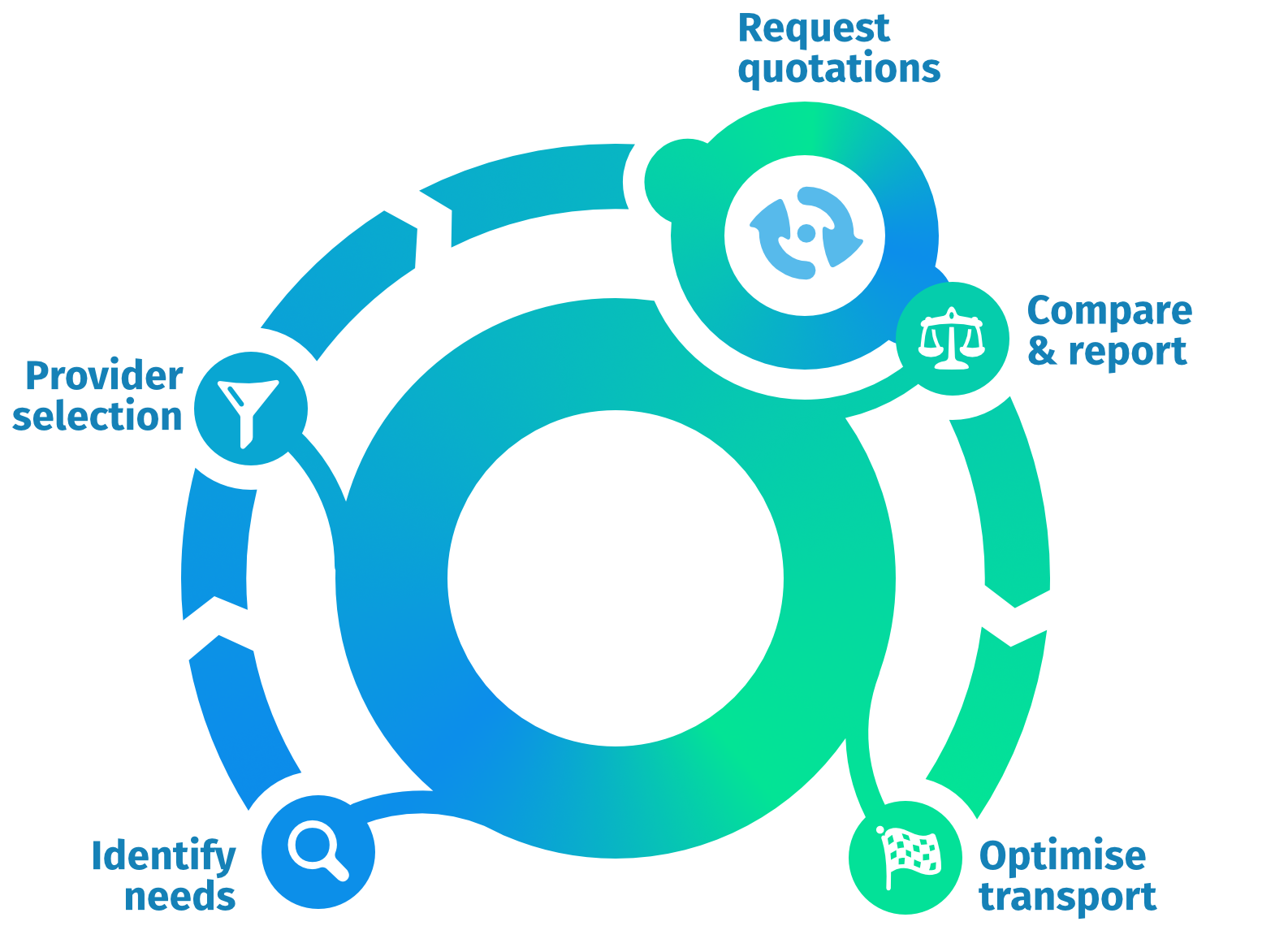
Management: Once the data is available, you can start managing. However, you need to have the tools to do so. You need buttons to turn and knobs to adjust. How do you record what is going well and what is not? What can you do differently if things are not going according to plan? It starts with smart transportation procurement (transport tendering), where our advice is to choose the right mix of carriers (more than one) to ensure a cost-effective but also robust operation. Good organization beforehand makes good management much easier.

Again, a good TMS ensures that the tools for management are available in the same place as the data. For each shipment, there is immediate insight into cost and delivery time options, insight into which orders require urgent action, and the ability to record quality problems immediately.

Clear processes and responsibilities: With a TMS, information is available, and there is the ability to manage. This often reveals the most challenging aspect, namely the knowledge and discipline to actually take control. Good tools are half the job, but the other half is discipline and craftsmanship. Air traffic controllers do not receive thorough training for nothing and work according to strict processes and clear responsibilities. This is often underestimated in transport management. Both internal and external stakeholders need to know what their tasks and responsibilities are and how they should work. Someone needs to take charge of this. Analysis of key performance indicators should lead to the right actions and the management of the internal operation and logistics service providers.

Outsource or do it yourself?

Especially because of the last aspect, a control tower is sometimes outsourced. This has advantages and disadvantages. The advantage is, of course, that shippers do not have to invest in a TMS themselves, and that the hired specialist makes capacity available. A disadvantage is the independence of the external specialist and the transparency. 3PL and 4PL parties often have agreements with carriers that do not necessarily use the best carriers in the market. It can also be that own trucks are used for the wrong reasons. Depending on the business model, service providers do not necessarily make the best choices for their customers (conflict of interest), and there is often no complete transparency. The margin that a 3PL/4PL asks for also leads to cost increases compared to doing it yourself and must be weighed against the investment in a TMS and time.

Doing it yourself means investing in people and resources, but it is always the most transparent, leads to the most direct control of the transportation operation, and gives the most flexibility to switch carriers if it is better due to quality, cost, or market developments.

How does Transinnovate help shippers?

We can support shippers in all steps of the process regarding a control tower. This starts with good organization and smart procurement, so that there is something to choose and steer. In addition, we provide modular and accessible TMS solutions that make transport management software now also accessible to small businesses and SMEs. This gives you up-to-date and complete information that is easily accessible, and the ability to intervene directly. We can help you define processes and responsibilities clearly, and train your personnel to manage them effectively. Finally, we can also provide complete outsourcing services by offering to manage your Control Tower. Our knowledge, experience and independent position (no agreements with carriers and no own transport equipment) ensure that we can transparently and effectively help you achieve your goals. This way, we help you maintain a healthy margin and satisfied customers (optimal freight costs with good quality).

If you would like to learn more about how we can help you reduce your transport costs, please feel free to contact us.
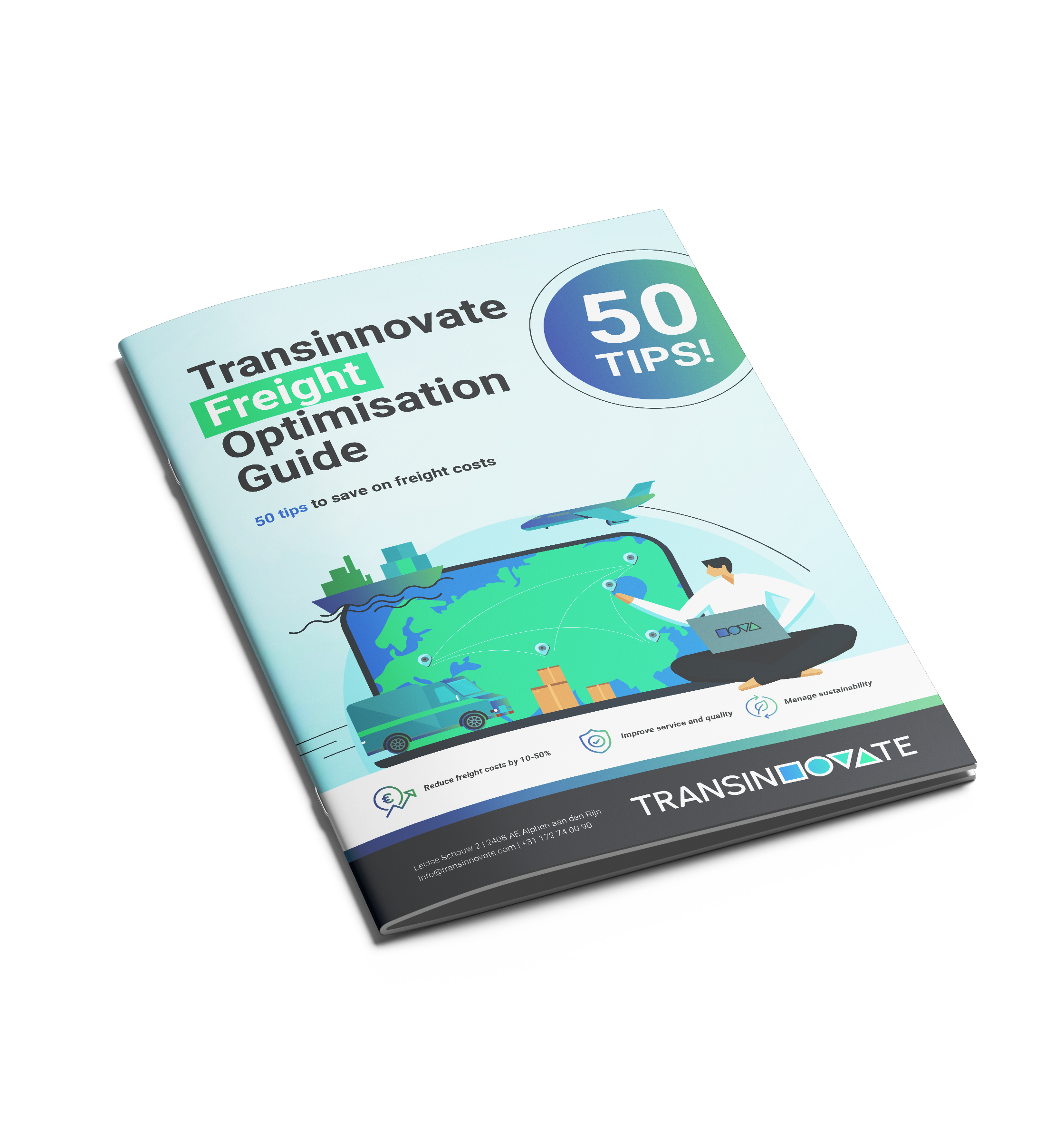
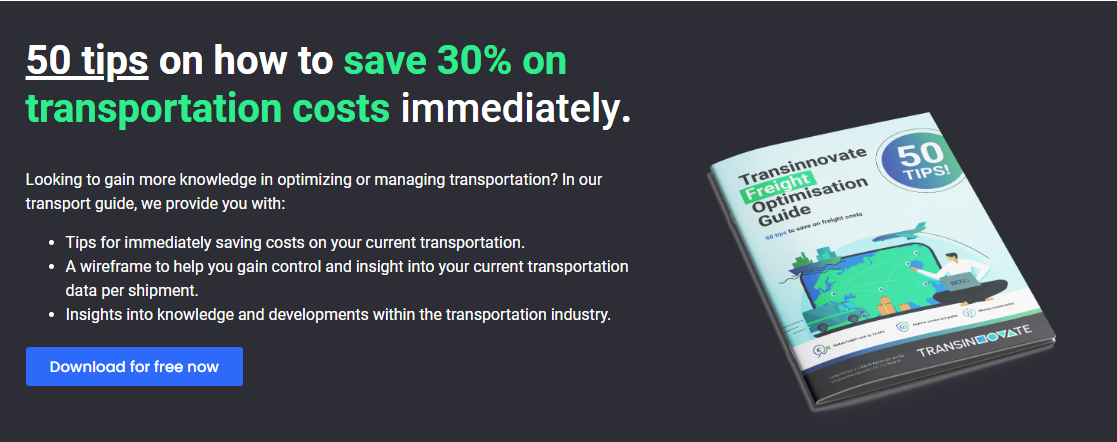
50 tips on how to save 30% on transportation costs immediately.


Looking to gain more knowledge in optimizing or managing transportation? In our transport guide, we provide you with:

  • Tips for immediately saving costs on your current transportation.
  • A wireframe to help you gain control and insight into your current transportation data per shipment.
  • Insights into knowledge and developments within the transportation industry.

Smarter transport decisions start here.

Manage all your carriers from one place.
Track costs, choose the right carrier, and optimize your transport operations with Transinnovate’s TMS.

Cloud-based TMS for Shippers: Features, Benefits & Use Cases

How a Cloud-Based Transportation Management System (TMS) for Shippers Improves Efficiency

Transinnovate provides a cloud-based Transportation Management System (TMS) for shippers to reduce transportation costs, improve operational efficiency, and streamline supply chain processes. Our TMS is ideal for logistics teams looking to manage shipments efficiently, save time, and minimize errors commonly associated with traditional, manual transport processes. With our platform, companies gain a centralized solution to oversee all transportation activities, ensuring better planning, coordination, and execution.

Optimize Your Supply Chain with a Cloud-Based Transportation Management System (TMS) for shippers

Traditional transportation processes are often slow, manual, and prone to errors, resulting in higher operational costs. With a cloud-based transportation management system (tms) for shippers, Transinnovate TMS provides real-time visibility into shipments, enabling businesses to track deliveries, monitor transport conditions, and anticipate delays before they affect operations. Companies can make smarter decisions using live data, such as rerouting shipments to avoid congested routes or reallocating resources for urgent deliveries, improving overall supply chain efficiency.

By leveraging real-time tracking and analytics, shippers can identify inefficiencies, reduce wasted time, and enhance overall supply chain performance. Real-time freight tracking software ensures that logistics teams are always informed, resulting in faster response times and improved customer satisfaction.

Advanced Optimization Algorithms in a Cloud-Based Transportation Management System

Our TMS uses advanced route optimization algorithms to automatically determine the most cost-effective and efficient shipping paths. This reduces fuel costs, shortens delivery times, and improves overall fleet utilization. Additionally, the integrated digital freight procurement system allows shippers to source the best carriers for their needs, compare rates, and automate the tendering process.

By digitizing freight procurement, businesses can reduce manual errors, negotiate better pricing, and ensure compliance with industry standards. This system also provides detailed reporting on shipping performance, cost savings, and operational efficiency, giving logistics managers clear insights into every stage of the transportation process.

Cloud-Based Transportation Management System

Benefits of Using Cloud-Based Transportation Management System (TMS) for shippers

Companies using Transinnovate TMS enjoy numerous benefits, including:

  • Reduced transport costs through route optimization and efficient carrier selection.
  • Automated freight planning to minimize human errors and improve scheduling accuracy.
  • Improved operational efficiency, allowing logistics teams to focus on high-value tasks rather than manual coordination.
  • Enhanced supply chain transparency with real-time shipment tracking and reporting.
  • Scalable solutions for growing businesses, supporting both small and large logistics operations.

Our solution is particularly useful for shippers, 3PL providers, and logistics managers who want to streamline operations, improve delivery performance, and achieve measurable cost savings across the supply chain.

How Transinnovate TMS Improves Shipment Accuracy

One of the most critical advantages of using a cloud-based transportation management system is the significant reduction in shipment errors. Automated processes help eliminate mistakes caused by manual data entry or outdated information. Alerts and notifications ensure that logistics managers are immediately informed of any delays, missed pickups, or compliance issues, allowing for quick corrective actions.
 
Companies can also maintain historical shipment data for audits and performance analysis, enabling continuous improvement in logistics planning. This data-driven approach leads to higher accuracy, fewer lost shipments, and a more reliable delivery network, ultimately improving overall supply chain performance.
 
Unternehmen können historische Sendungsdaten für Audits und Leistungsanalysen speichern, wodurch kontinuierliche Verbesserungen in der Logistikplanung möglich sind. Dieser datengetriebene Ansatz führt zu höherer Genauigkeit, weniger verlorenen Sendungen und einem zuverlässigeren Liefernetzwerk, was die Gesamtleistung der Supply Chain verbessert.
 

Integration with Existing Systems

Transinnovate TMS can easily integrate with existing ERP, WMS, and supply chain management systems, creating a seamless workflow across all business operations. This ensures that all departments—sales, operations, and finance—have access to consistent, real-time transportation data.
 
Integration reduces duplication of work, enhances communication, and provides a holistic view of logistics performance. Businesses can consolidate reporting, monitor KPIs, and ensure that transportation strategies align with broader organizational goals.

Start Optimizing Your Transportation Operations Today

Discover how Transinnovate’s cloud TMS solutions can transform your logistics processes, optimize freight management, and deliver measurable results. By implementing a cloud-based TMS, companies can reduce shipping costs, improve operational efficiency, and gain a competitive edge in today’s fast-paced logistics environment.

Schedule a demo, explore our platform, or learn more at www.transinnovate.com to start optimizing your transportation operations today.

Also you can check out our Linkedin company profile for more interesting blogs!

FAS Incoterm® (Free alongside Ship)

What is FAS Incoterm®? FAS (Free Alongside Ship) is one of the official Incoterms®2020 rules published by the International Chamber…

CIF Incoterm® (Cost, Insurance and Freight)

The CIF Incoterms® is one of the standardized international delivery terms agreed upon between buyer and seller. These are rules…