
Cloud-based TMS for Shippers: Features, Benefits & Use Cases

Achieve More with Efficient Transport Tenders

Make smarter choices, save costs, and boost performance with expert-led tenders!

Table of content

How a Cloud-Based Transportation Management System (TMS) for Shippers Improves Efficiency

Transinnovate provides a cloud-based Transportation Management System (TMS) for shippers to reduce transportation costs, improve operational efficiency, and streamline supply chain processes. Our TMS is ideal for logistics teams looking to manage shipments efficiently, save time, and minimize errors commonly associated with traditional, manual transport processes. With our platform, companies gain a centralized solution to oversee all transportation activities, ensuring better planning, coordination, and execution.

Optimize Your Supply Chain with a Cloud-Based Transportation Management System (TMS) for shippers

Traditional transportation processes are often slow, manual, and prone to errors, resulting in higher operational costs. With a cloud-based transportation management system (tms) for shippers, Transinnovate TMS provides real-time visibility into shipments, enabling businesses to track deliveries, monitor transport conditions, and anticipate delays before they affect operations. Companies can make smarter decisions using live data, such as rerouting shipments to avoid congested routes or reallocating resources for urgent deliveries, improving overall supply chain efficiency.

By leveraging real-time tracking and analytics, shippers can identify inefficiencies, reduce wasted time, and enhance overall supply chain performance. Real-time freight tracking software ensures that logistics teams are always informed, resulting in faster response times and improved customer satisfaction.

Advanced Optimization Algorithms in a Cloud-Based Transportation Management System

Our TMS uses advanced route optimization algorithms to automatically determine the most cost-effective and efficient shipping paths. This reduces fuel costs, shortens delivery times, and improves overall fleet utilization. Additionally, the integrated digital freight procurement system allows shippers to source the best carriers for their needs, compare rates, and automate the tendering process.
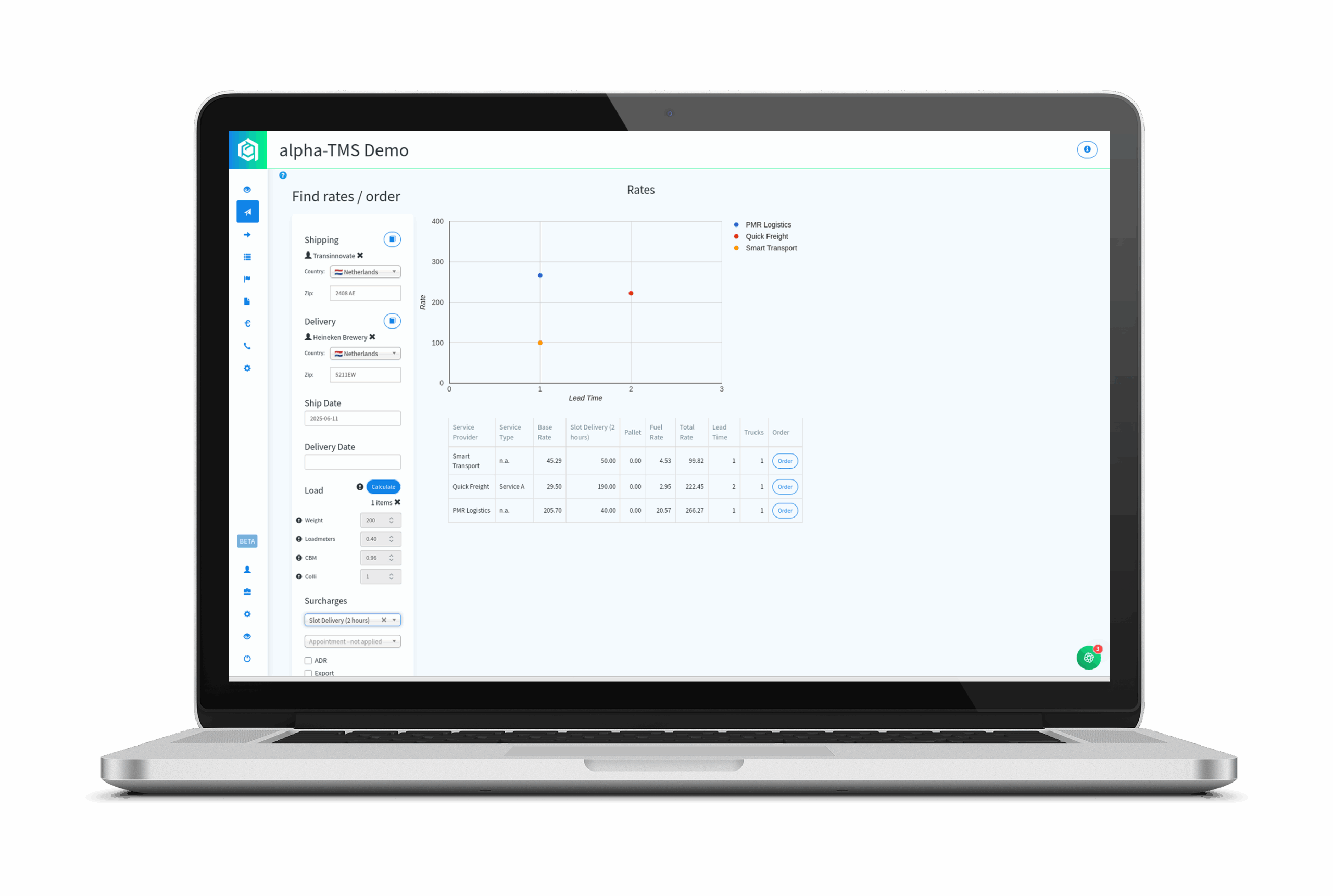
By digitizing freight procurement, businesses can reduce manual errors, negotiate better pricing, and ensure compliance with industry standards. This system also provides detailed reporting on shipping performance, cost savings, and operational efficiency, giving logistics managers clear insights into every stage of the transportation process.

Cloud-Based Transportation Management System

Benefits of Using Cloud-Based Transportation Management System (TMS) for shippers

Companies using Transinnovate TMS enjoy numerous benefits, including:

  • Reduced transport costs through route optimization and efficient carrier selection.
  • Automated freight planning to minimize human errors and improve scheduling accuracy.
  • Improved operational efficiency, allowing logistics teams to focus on high-value tasks rather than manual coordination.
  • Enhanced supply chain transparency with real-time shipment tracking and reporting.
  • Scalable solutions for growing businesses, supporting both small and large logistics operations.

Our solution is particularly useful for shippers, 3PL providers, and logistics managers who want to streamline operations, improve delivery performance, and achieve measurable cost savings across the supply chain.

How Transinnovate TMS Improves Shipment Accuracy

One of the most critical advantages of using a cloud-based transportation management system is the significant reduction in shipment errors. Automated processes help eliminate mistakes caused by manual data entry or outdated information. Alerts and notifications ensure that logistics managers are immediately informed of any delays, missed pickups, or compliance issues, allowing for quick corrective actions.
 
Companies can also maintain historical shipment data for audits and performance analysis, enabling continuous improvement in logistics planning. This data-driven approach leads to higher accuracy, fewer lost shipments, and a more reliable delivery network, ultimately improving overall supply chain performance.
 
Unternehmen können historische Sendungsdaten für Audits und Leistungsanalysen speichern, wodurch kontinuierliche Verbesserungen in der Logistikplanung möglich sind. Dieser datengetriebene Ansatz führt zu höherer Genauigkeit, weniger verlorenen Sendungen und einem zuverlässigeren Liefernetzwerk, was die Gesamtleistung der Supply Chain verbessert.
 

Integration with Existing Systems

Transinnovate TMS can easily integrate with existing ERP, WMS, and supply chain management systems, creating a seamless workflow across all business operations. This ensures that all departments—sales, operations, and finance—have access to consistent, real-time transportation data.
 
Integration reduces duplication of work, enhances communication, and provides a holistic view of logistics performance. Businesses can consolidate reporting, monitor KPIs, and ensure that transportation strategies align with broader organizational goals.

Start Optimizing Your Transportation Operations Today

Discover how Transinnovate’s cloud TMS solutions can transform your logistics processes, optimize freight management, and deliver measurable results. By implementing a cloud-based TMS, companies can reduce shipping costs, improve operational efficiency, and gain a competitive edge in today’s fast-paced logistics environment.

Schedule a demo, explore our platform, or learn more at www.transinnovate.com to start optimizing your transportation operations today.

Also you can check out our Linkedin company profile for more interesting blogs!
50 tips on how to save 30% on transportation costs immediately.


Looking to gain more knowledge in optimizing or managing transportation? In our transport guide, we provide you with:

  • Tips for immediately saving costs on your current transportation.
  • A wireframe to help you gain control and insight into your current transportation data per shipment.
  • Insights into knowledge and developments within the transportation industry.

Smarter transport decisions start here.

Manage all your carriers from one place.
Track costs, choose the right carrier, and optimize your transport operations with Transinnovate’s TMS.

Cloud-based TMS for Shippers: Features, Benefits & Use Cases

How a Cloud-Based Transportation Management System (TMS) for Shippers Improves Efficiency

Transinnovate provides a cloud-based Transportation Management System (TMS) for shippers to reduce transportation costs, improve operational efficiency, and streamline supply chain processes. Our TMS is ideal for logistics teams looking to manage shipments efficiently, save time, and minimize errors commonly associated with traditional, manual transport processes. With our platform, companies gain a centralized solution to oversee all transportation activities, ensuring better planning, coordination, and execution.

Optimize Your Supply Chain with a Cloud-Based Transportation Management System (TMS) for shippers

Traditional transportation processes are often slow, manual, and prone to errors, resulting in higher operational costs. With a cloud-based transportation management system (tms) for shippers, Transinnovate TMS provides real-time visibility into shipments, enabling businesses to track deliveries, monitor transport conditions, and anticipate delays before they affect operations. Companies can make smarter decisions using live data, such as rerouting shipments to avoid congested routes or reallocating resources for urgent deliveries, improving overall supply chain efficiency.

By leveraging real-time tracking and analytics, shippers can identify inefficiencies, reduce wasted time, and enhance overall supply chain performance. Real-time freight tracking software ensures that logistics teams are always informed, resulting in faster response times and improved customer satisfaction.

Advanced Optimization Algorithms in a Cloud-Based Transportation Management System

Our TMS uses advanced route optimization algorithms to automatically determine the most cost-effective and efficient shipping paths. This reduces fuel costs, shortens delivery times, and improves overall fleet utilization. Additionally, the integrated digital freight procurement system allows shippers to source the best carriers for their needs, compare rates, and automate the tendering process.

By digitizing freight procurement, businesses can reduce manual errors, negotiate better pricing, and ensure compliance with industry standards. This system also provides detailed reporting on shipping performance, cost savings, and operational efficiency, giving logistics managers clear insights into every stage of the transportation process.

Cloud-Based Transportation Management System

Benefits of Using Cloud-Based Transportation Management System (TMS) for shippers

Companies using Transinnovate TMS enjoy numerous benefits, including:

  • Reduced transport costs through route optimization and efficient carrier selection.
  • Automated freight planning to minimize human errors and improve scheduling accuracy.
  • Improved operational efficiency, allowing logistics teams to focus on high-value tasks rather than manual coordination.
  • Enhanced supply chain transparency with real-time shipment tracking and reporting.
  • Scalable solutions for growing businesses, supporting both small and large logistics operations.

Our solution is particularly useful for shippers, 3PL providers, and logistics managers who want to streamline operations, improve delivery performance, and achieve measurable cost savings across the supply chain.

How Transinnovate TMS Improves Shipment Accuracy

One of the most critical advantages of using a cloud-based transportation management system is the significant reduction in shipment errors. Automated processes help eliminate mistakes caused by manual data entry or outdated information. Alerts and notifications ensure that logistics managers are immediately informed of any delays, missed pickups, or compliance issues, allowing for quick corrective actions.
 
Companies can also maintain historical shipment data for audits and performance analysis, enabling continuous improvement in logistics planning. This data-driven approach leads to higher accuracy, fewer lost shipments, and a more reliable delivery network, ultimately improving overall supply chain performance.
 
Unternehmen können historische Sendungsdaten für Audits und Leistungsanalysen speichern, wodurch kontinuierliche Verbesserungen in der Logistikplanung möglich sind. Dieser datengetriebene Ansatz führt zu höherer Genauigkeit, weniger verlorenen Sendungen und einem zuverlässigeren Liefernetzwerk, was die Gesamtleistung der Supply Chain verbessert.
 

Integration with Existing Systems

Transinnovate TMS can easily integrate with existing ERP, WMS, and supply chain management systems, creating a seamless workflow across all business operations. This ensures that all departments—sales, operations, and finance—have access to consistent, real-time transportation data.
 
Integration reduces duplication of work, enhances communication, and provides a holistic view of logistics performance. Businesses can consolidate reporting, monitor KPIs, and ensure that transportation strategies align with broader organizational goals.

Start Optimizing Your Transportation Operations Today

Discover how Transinnovate’s cloud TMS solutions can transform your logistics processes, optimize freight management, and deliver measurable results. By implementing a cloud-based TMS, companies can reduce shipping costs, improve operational efficiency, and gain a competitive edge in today’s fast-paced logistics environment.

Schedule a demo, explore our platform, or learn more at www.transinnovate.com to start optimizing your transportation operations today.

Also you can check out our Linkedin company profile for more interesting blogs!
FAS Incoterm® (Free alongside Ship)

What is FAS Incoterm®?

FAS (Free Alongside Ship) is one of the official Incoterms®2020 rules published by the International Chamber of Commerce (ICC). It applies exclusively to maritime transport and means that the seller is responsible for delivering the goods alongside the vessel at a named port of shipment. At this point, risk and cost transfer from the seller to the buyer.

Incoterms® are globally standardized trade terms that define who is responsible for transportation, costs, and risk during international shipping. The latest version, Incoterms® 2020, came into effect on January 1st, 2020.

An overview of all incoterms is available here.

Incoterms 2020 responsibilities


The Free Alongside Ship (FAS) Incoterm is an international trade agreement that is used for transport by water. In an FAS arrangement, the seller is responsible for delivering the goods to a named port, placing them alongside the vessel. The transfer of risk and cost occurs when the goods are alongside the ship and ready for export.

Advantages FAS Incoterm®

Clear Transfer of Risk

FAS provides a clearly defined point where responsibility transfers from seller to buyer: when the goods are placed alongside the vessel. This reduces the risk of misunderstandings or disputes.

Buyer Controls the Main Transport

Once goods are alongside the ship, the buyer takes over transport arrangements, which allows them to choose their preferred carrier, shipping schedule, and potentially negotiate lower freight rates.

Widely Applicable in Maritime Trade

FAS is particularly suitable for bulk cargo and large-volume shipments where the buyer has experience managing ocean freight or prefers to control logistics beyond the port of departure.

Drawbacks FAS Incoterm®

Limited Seller Responsibility

The seller’s responsibility ends before the goods are loaded onto the ship. If damage occurs during loading or the main transport, the buyer bears the risk and must handle insurance or claims.

Early Risk Transfer

Risk transfers to the buyer at the port, not after loading or departure. If the goods are damaged after being placed alongside the ship but before loading, the buyer is still responsible.

Risk of Disputes

Disagreements may arise if the loading process is unclear or if issues occur during shipping. It’s crucial to define in the contract who handles loading, inspections, and documentation.

Example of FAS in Practice

A wine producer in France sells bulk wine to a distributor in the United States. The agreed Incoterm is FAS – Port of Marseille.
The seller delivers the wine in barrels to the Marseille port and places them alongside the vessel. From that moment, the buyer handles the loading, sea freight to New York, and customs clearance.


Summary Free alongside Ship

  • Transport Mode: Maritime (sea or inland waterway only)

  • Seller Obligation: Deliver goods alongside the ship at named port

  • Buyer Obligation: Handle loading, main carriage, insurance, import

  • Risk Transfers: When goods are placed alongside the ship

  • Best For: Buyers who want control over ocean freight and logistics

In summary, FAS provides a clear transfer of risk and is suitable for buyers seeking control over transportation logistics. However, sellers have limited responsibility after the goods are placed alongside the ship. Careful communication and a well-drafted contract are essential to ensure a smooth FAS transaction and avoid potential disputes.

Do you frequently require goods to be transported in short sea of ocean freight, either as seller or as buyer? If you would like to discuss which Incoterms® and transport solution fit best to your case, 

Need Help Choosing the Right Incoterm®?

Do you frequently import or export goods via sea freight?
Are you unsure which Incoterm best suits your business?

Contact our logistics experts for personalized advice on Incoterms® and optimal transport solutions.

FAS vs other incoterms

What does FAS stand for? FAS stands for Free Alongside Ship – meaning the seller delivers goods…

CIF Incoterm® (Cost, Insurance and Freight)

The CIF Incoterms® is one of the standardized international delivery terms agreed upon between buyer and seller. These are rules that establish worldwide agreements on transport, costs, and any potential damage during transportation. Every ten years, the International Chamber of Commerce (ICC) updates the Incoterms®. The most recent version, the ICC Incoterms® 2020, came into effect on January 1st, 2020. An overview of all incoterms is available here.

Incoterms 2025 responsibilities

What is CIF Incoterm®?

The Cost, Insurance and Freight (CIF) Incoterm® is a widely recognized international trade agreement specifically designed for the transportation of goods over sea or inland waterways. Under a CIF arrangement, the seller assumes a significant portion of the responsibility and cost associated with delivering the goods. This includes not only transporting the goods to the agreed-upon port of destination but also paying for the freight charges as well as procuring and maintaining adequate insurance coverage to protect the shipment during transit. The seller is required to provide the buyer with the necessary documentation, such as the bill of lading and insurance policy, to enable the buyer to claim the goods upon arrival. It is important to note that, despite the seller’s extensive obligations regarding cost and insurance, the transfer of risk from the seller to the buyer occurs as soon as the goods pass the ship’s rail at the port of shipment. This distinction between cost responsibility and risk transfer is a defining characteristic of the CIF Incoterm and plays a crucial role in international maritime trade, as it clearly delineates the obligations, rights, and liabilities of both parties involved in the transaction.

Advantages CIF Incoterm®

    • Comprehensive Service for Buyers: CIF Incoterm provides a comprehensive service for buyers as the seller is responsible for the cost of transportation to the named port, freight charges, and insurance. This minimizes the burden on the buyer and simplifies the purchasing process.
    • Reduced Buyer Risk: With insurance included, CIF mitigates risks associated with transportation, such as damage, loss, or theft. Buyers benefit from added security, knowing that the goods are insured during transit.
    • Clear Cost Structure: CIF offers transparency in costs as the seller covers transportation costs, freight charges, and insurance. Buyers have a clear understanding of the total financial commitment involved in the transaction.

Drawbacks CIF Incoterm®

  • Limited Seller Responsibility: Sellers have limited responsibility after the goods are loaded onto the vessel. If issues such as damage or delays occur during the ocean freight, the buyer bears the responsibility and cost of addressing these problems.Risk Transfer at Ship’s Rail: The risk transfer point is when the goods pass the ship’s rail. If damage or loss occurs before this point, the seller is responsible. However, the risk transfers to the buyer relatively early in the transportation process.
  • Risk Transfer at Ship’s Rail: The risk transfer point is when the goods pass the ship’s rail. If damage or loss occurs before this point, the seller is responsible. However, the risk transfers to the buyer relatively early in the transportation process.
  • Potential for Disputes: Disputes may arise if there are disagreements about the loading process or if issues occur during the ocean freight. Clear communication and detailed agreements on loading procedures and responsibilities are crucial to mitigate these risks.

Summary Cost, Insurance and Freight

In summary, CIF Incoterm offers a comprehensive solution for buyers, with the seller covering transportation costs, freight charges, and insurance. While it provides a clear cost structure and risk mitigation, buyers need to be aware of the limited seller responsibility after the goods are loaded onto the vessel. Careful communication and a well-drafted contract are essential to ensure a smooth CIF transaction and avoid potential disputes. Do you frequently require goods to be transported in short sea of ocean freight, either as seller or as buyer?

 If you would like to discuss which Incoterms® and transport solution fit best to your case, please contact us.

Also, you can check out our Linkedin profile for more interesting facts about Transinnovate!