FAS Incoterm® (Free alongside Ship)
5 May 2026
ICC Incoterms®, including the FAS incoterm, are standardized international delivery conditions. Read more info here at our website - transinnovate.com
What is FAS Incoterm®?
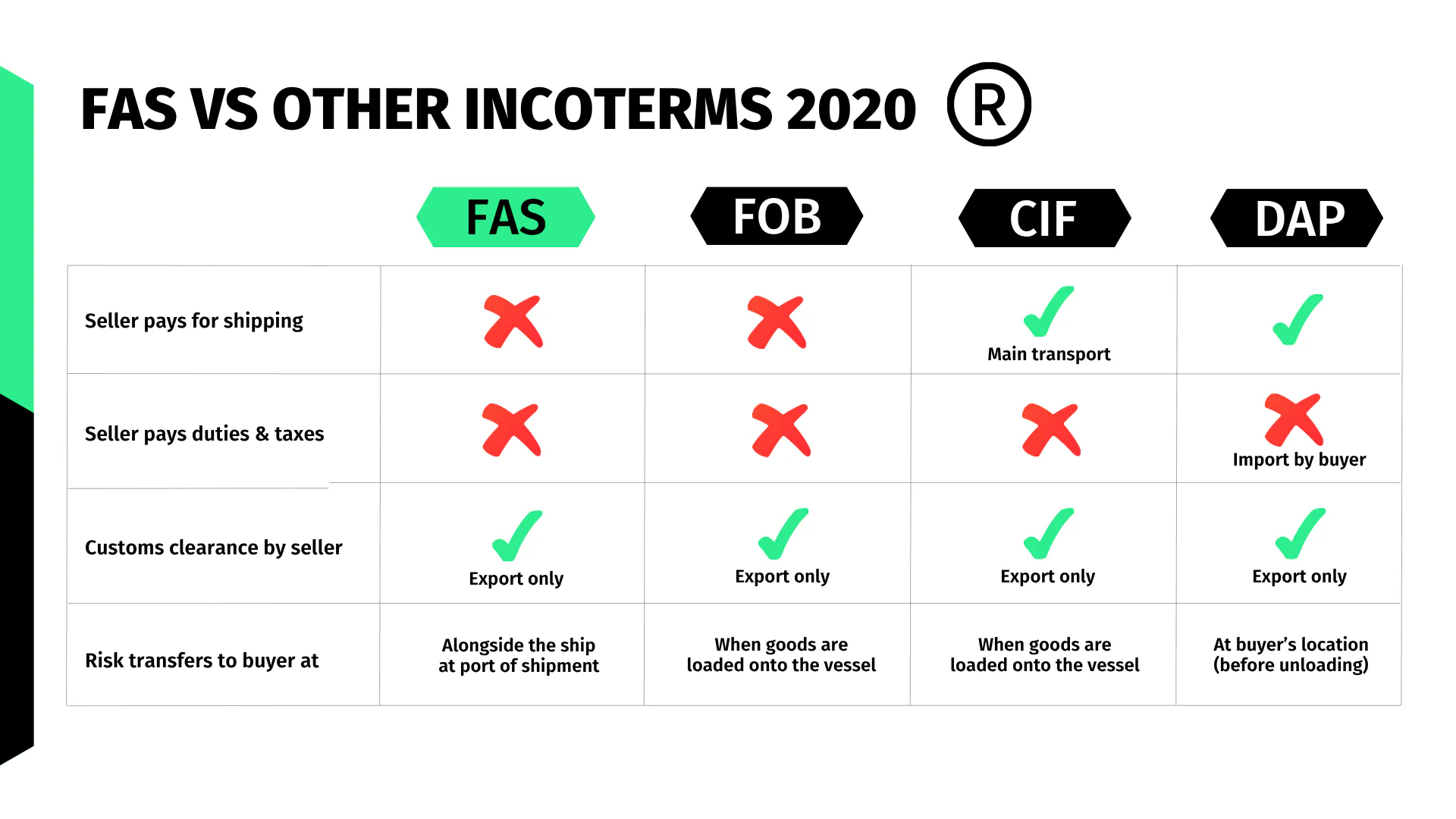
FAS (Free Alongside Ship) is one of the official Incoterms®2020 rules published by the International Chamber of Commerce (ICC). It applies exclusively to maritime transport and means that the seller is responsible for delivering the goods alongside the vessel at a named port of shipment. At this point, risk and cost transfer from the seller to the buyer.
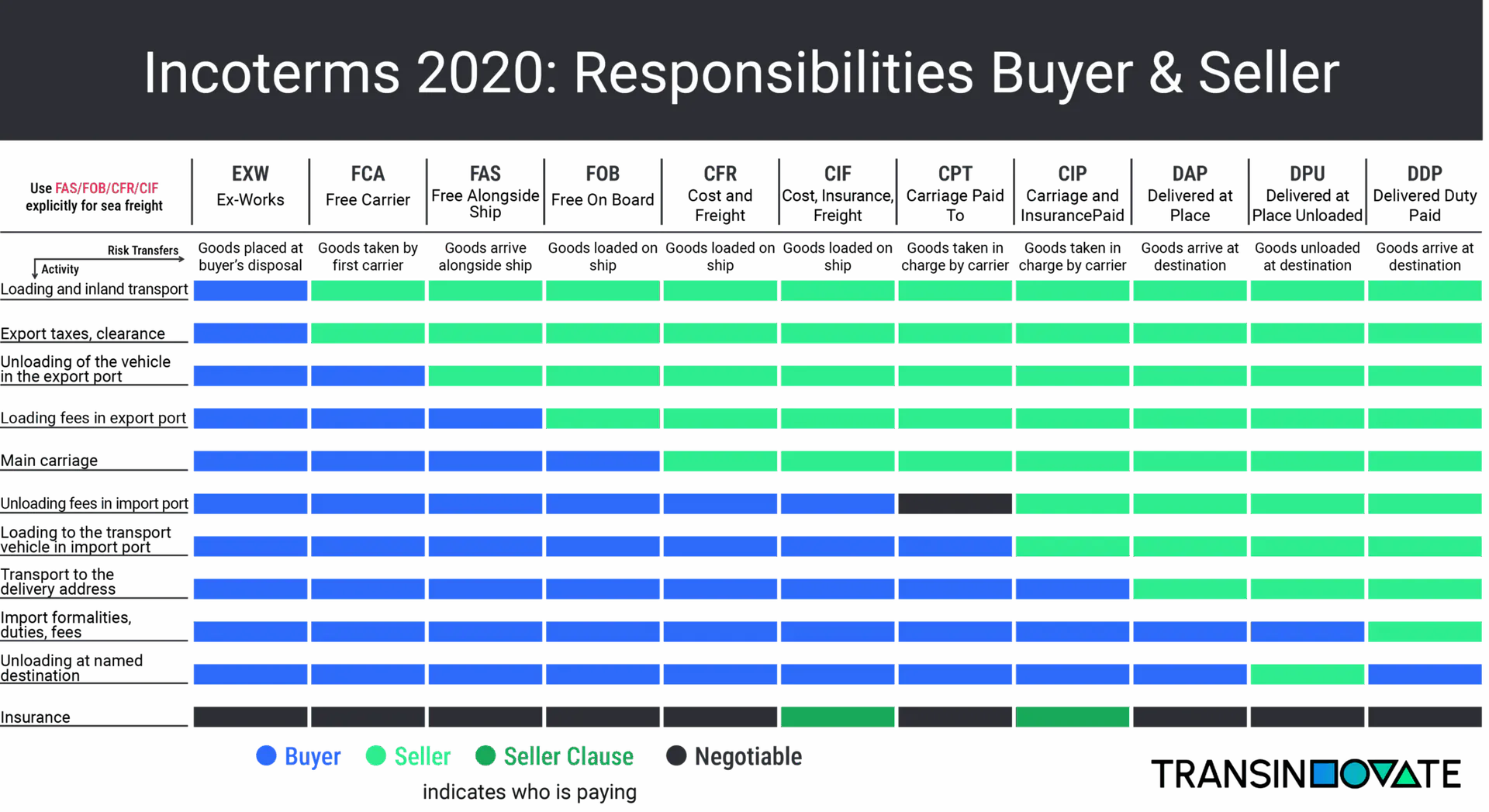
Incoterms® are globally standardized trade terms that define who is responsible for transportation, costs, and risk during international shipping. The latest version, Incoterms® 2020, came into effect on January 1st, 2020.
An overview of all incoterms is available here.
The Free Alongside Ship (FAS) Incoterm is an international trade agreement that is used for transport by water. In an FAS arrangement, the seller is responsible for delivering the goods to a named port, placing them alongside the vessel. The transfer of risk and cost occurs when the goods are alongside the ship and ready for export.
Advantages FAS Incoterm®
Clear Transfer of Risk
FAS provides a clearly defined point where responsibility transfers from seller to buyer: when the goods are placed alongside the vessel. This reduces the risk of misunderstandings or disputes.
Buyer Controls the Main Transport
Once goods are alongside the ship, the buyer takes over transport arrangements, which allows them to choose their preferred carrier, shipping schedule, and potentially negotiate lower freight rates.
Widely Applicable in Maritime Trade
FAS is particularly suitable for bulk cargo and large-volume shipments where the buyer has experience managing ocean freight or prefers to control logistics beyond the port of departure.
Drawbacks FAS Incoterm®
Limited Seller Responsibility
The seller’s responsibility ends before the goods are loaded onto the ship. If damage occurs during loading or the main transport, the buyer bears the risk and must handle insurance or claims.
Early Risk Transfer
Risk transfers to the buyer at the port, not after loading or departure. If the goods are damaged after being placed alongside the ship but before loading, the buyer is still responsible.
Risk of Disputes
Disagreements may arise if the loading process is unclear or if issues occur during shipping. It’s crucial to define in the contract who handles loading, inspections, and documentation.
Example of FAS in Practice
A wine producer in France sells bulk wine to a distributor in the United States. The agreed Incoterm is FAS – Port of Marseille.
The seller delivers the wine in barrels to the Marseille port and places them alongside the vessel. From that moment, the buyer handles the loading, sea freight to New York, and customs clearance.
Summary Free alongside Ship
-
Transport Mode: Maritime (sea or inland waterway only)
-
Seller Obligation: Deliver goods alongside the ship at named port
-
Buyer Obligation: Handle loading, main carriage, insurance, import
-
Risk Transfers: When goods are placed alongside the ship
-
Best For: Buyers who want control over ocean freight and logistics
In summary, FAS provides a clear transfer of risk and is suitable for buyers seeking control over transportation logistics. However, sellers have limited responsibility after the goods are placed alongside the ship. Careful communication and a well-drafted contract are essential to ensure a smooth FAS transaction and avoid potential disputes.
Do you frequently require goods to be transported in short sea of ocean freight, either as seller or as buyer? If you would like to discuss which Incoterms® and transport solution fit best to your case,
Need Help Choosing the Right Incoterm®?
Do you frequently import or export goods via sea freight?
Are you unsure which Incoterm best suits your business?
Contact our logistics experts for personalized advice on Incoterms® and optimal transport solutions.