Transport tendering is a complex and time-consuming process. Many companies lack dedicated procurement expertise, time and the tools required to run a structured tender. As a result this often leads to unnecessarily high freight costs.
Common challenges include:
Limited visibility into market rates and carrier benchmarks
Lack of structured tendering process and methodology
Struggles with complex pricing models and surcharge structures
No dedicated software for data analysis and scenario building
Limited time and resources to manage tenders effectively

What makes our approach different?
At Transinnovate, we manage freight tendering as a structured, expert-led process tailored to your needs. We combine procurement expertise, market intelligence, and dedicated tools to optimise cost, service, and transparency. Compared to in-house or non-specialist tendering, our logistics procurement specialists typically deliver significantly stronger outcomes, often resulting in substantial additional cost savings, alongside measurable improvements in service quality and sustainability.
Managing your tender hands-on from start to finish
Driven by logistics procurement specialists, not a software-only process
From tender projects and transport management software
Supported by proprietary tender software and scenario modelling
Client-paid only, with no carrier commissions or incentives

Before committing to a full tender process, our free quick scan analyses your transport operation: shipment data, carrier mix, and cost base. This gives you a clear view of the savings potential. No commitment, no cost.
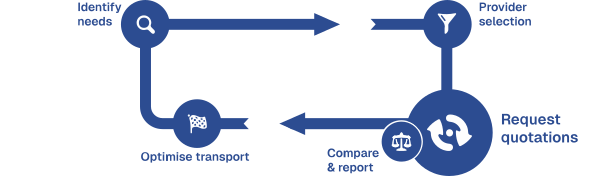
Our structured tendering process, from identifying needs to securing the best transport contracts.
We translate your transport strategy into a complete tender package, including RFQ documents, shipment data, evaluation criteria, planning, and process structure. This gives all carriers the same clear starting point.
We create a tailored carrier longlist, combining your existing carriers with selected new providers. Interested carriers sign an NDA before receiving the full RFQ package and shipment profile.
We collect and evaluate carrier offers using a standardised methodology. Based on cost, service, compliance, and scenario modelling, we identify the best carrier combinations and support structured award decisions.
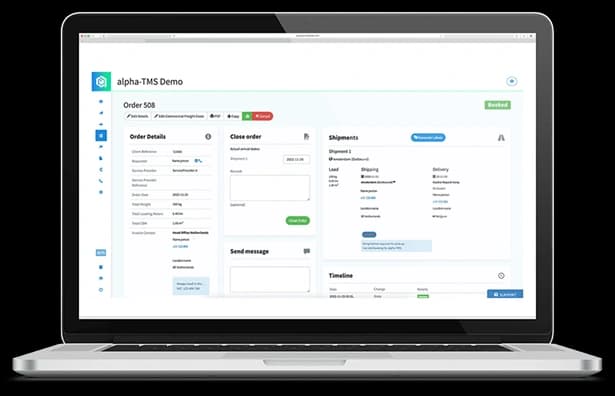
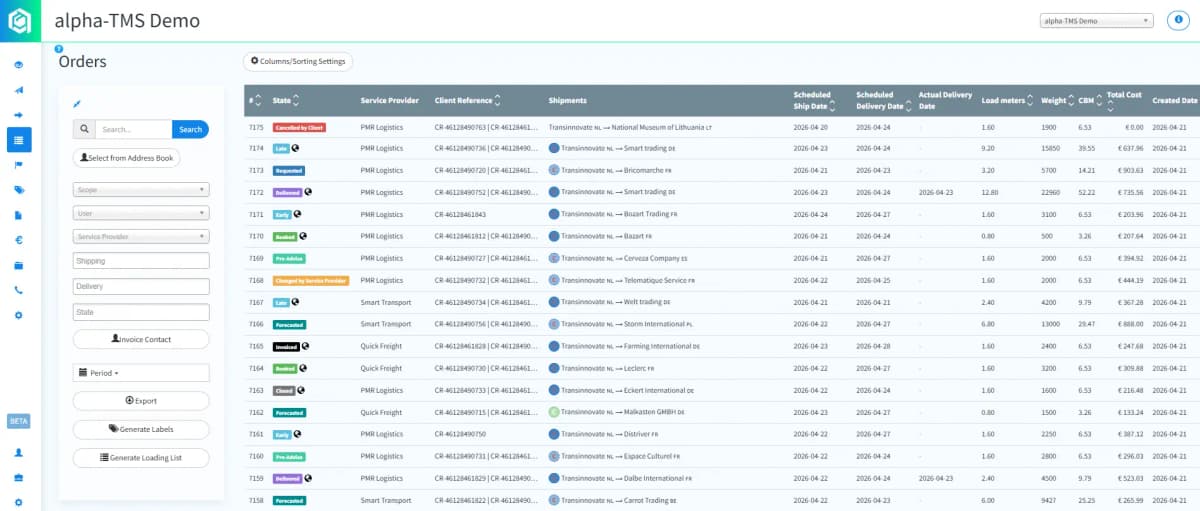
After carrier selection, we support the contracting phase and recommend aligning Sales and Operations Procedures. The final setup can continue in your existing systems or be integrated into our TMS for operational optimisation.
We help clients award the most cost-efficient carriers that meet their service and quality requirements.
10-30% reduction in transport costs through competitive, data-driven tendering
Optimised cost-to-service balance through structured selection of carriers
Greater pricing transparency across lanes, carriers, and surcharge structures
Optimised carrier mix (single or multi-carrier strategies based on scenario modelling)
Reduced internal workload through full tender management by dedicated specialists
Improved sustainability alignment through better carrier and network selection
Request our free quick scan. We map your transport flows and show you a concrete savings potential of up to 30% based on your own data.


Everything you need to know about our service!
How long does it take to execute a transport tender?
Typically a freight tender takes 3 up to 4 months. This of course depends on the complexity and scope. During a transport tender you want to give the logistics service providers enough time to prepare and adjust their quotations.
What does a transport tender cost, and what savings can I expect?
Costs depend on two factors: the scope of service (full tender management vs. specific support) and the scale (number of locations, countries, and carriers involved). Our clients typically achieve transport cost savings of 10-30%, with peaks up to 40% - our record stands at nearly 50%. We can also work on a performance basis, reducing or eliminating fixed costs.
What shipment data do I need to run a transport tender?
Data quality is critical for a successful freight tender. The better your shipment data, the more targeted and competitive the carrier offers you receive. We recommend sharing at least one full year of detailed data, including origin-destination pairs, dimensions, weights, and any special requirements such as desired surcharges. A well-matched shipment profile leads to sharper rates. Incomplete data forces carriers to build in price buffers.
How can you help me if I have limited, fragmented or incomplete shipment data?
The first step is usually to request complete shipment data directly from your carriers. However, carriers do not always have all the information needed either. For instance, if you have historically been charged based on loading meters but our analysis shows that CBM-based pricing would be more beneficial for your situation, the required data may simply not exist yet. In cases like these, we sometimes recommend running a free trial of our TMS for a few months. This allows you to build up a solid, accurate shipment data set, giving us everything we need to model the right pricing structure and deliver you optimal tender results.
How often should I execute a transport tender?
This depends on your industry and supply chain. We generally advise building long-term carrier partnerships with a recommended collaboration period of 3 to 5 years. Ongoing cooperation with continuous improvement yields better results than frequent retendering. After this period, it is wise to evaluate market developments and whether your freight rates are still competitive. If there are significant changes to your shipment or carrier profile, it might be wise to anticipate your timing.
We will happily answer your questions about freight tendering and show how our TMS fits into your processes.
Transinnovate Group BV
Leidse Schouw 2
2408 AE Alphen aan den Rijn
The Netherlands
info@transinnovate.com
+31 172 74 00 90