CFR Incoterm® (Cost And Freight)
4 May 2026
The CFR Incoterm® is one of the standardized international delivery terms agreed upon between buyer and seller. Read more on our website - transinnovate.com
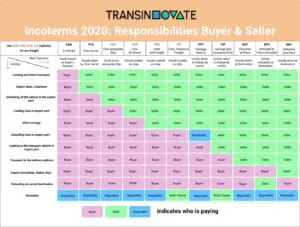
The CFR Incoterms® is one of the standardized international delivery terms agreed upon between buyer and seller. These are rules that establish worldwide agreements on transport, costs, and any potential damage during transportation. Every ten years, the International Chamber of Commerce (ICC) updates the Incoterms®. The most recent version, the ICC Incoterms® 2020, came into effect on January 1st, 2020. An overview of all incoterms is available here.
What is CFR Incoterm®?
The Cost and Freight (CFR) Incoterm is an international trade agreement that is used for transport over water. In a CFR arrangement, the seller is responsible for delivering the goods to a named port, covering the cost of transportation to the port and the freight charges. The transfer of risk occurs when the goods pass the ship’s rail.
Advantages CFR Incoterm®
- Clear Cost Division: CFR provides a clear division of costs between the seller and buyer. The seller is responsible for the cost of transportation to the named port and the freight charges, making it easier for both parties to understand their financial obligations.
- Simplified Logistics for Buyers: Once the goods are loaded onto the vessel, the buyer takes control of the transportation and logistics from the port onward. This allows buyers to choose carriers and shipping methods according to their preferences and potentially negotiate better rates.
- Global Applicability: CFR is suitable for both domestic and international transactions, making it a versatile Incoterm that can be applied to various trade scenarios.
Drawbacks CFR Incoterm®
- Limited Seller Responsibility: Sellers have limited responsibility after the goods are loaded onto the vessel. If issues such as damage or delays occur during the ocean freight, the buyer bears the responsibility and cost of addressing these problems.
- Risk Transfer at Ship’s Rail: The risk transfer point is when the goods pass the ship’s rail. If damage or loss occurs before this point, the seller is responsible. However, the risk transfers to the buyer relatively early in the transportation process.
- Potential for Disputes: Disputes may arise if there are disagreements about the loading process or if issues occur during the ocean freight. Clear communication and detailed agreements on loading procedures and responsibilities are crucial to mitigate these risks.
Summary Cost and Freight
In summary, CFR offers a clear division of costs and responsibilities at the port, simplifying logistics for both parties. Sellers benefit from reduced involvement after loading, while buyers gain control over transportation and potential cost savings. However, careful communication and well-drafted contracts are essential to avoid disputes, particularly regarding loading procedures and responsibilities.
Do you frequently require goods to be transported in short sea of ocean freight, either as seller or as buyer? If you would like to discuss which Incoterms® and transport solution fit best to your case, please contact us.