FCA Incoterm: Who Pays What - And How to Avoid Costly Disputes
5 May 2026
FCA Incoterm made simple: see who pays what, when risk passes and how to avoid costly disputes in one clear, example. Read more about this on transinnovate.com
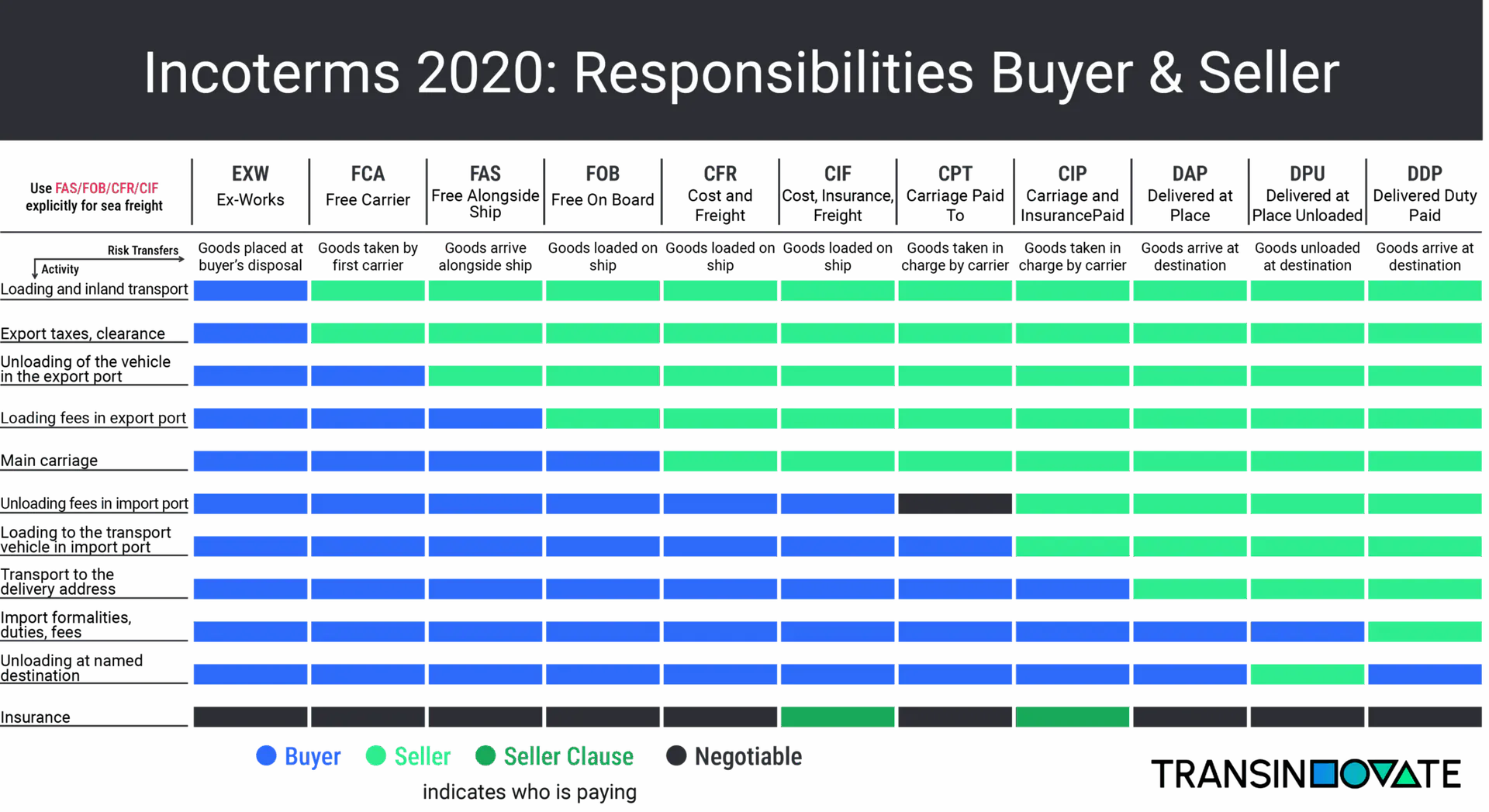
The FCA Incoterm® is one of the standardized international delivery terms agreed upon between buyer and seller. These are rules that establish worldwide agreements on transport, costs, and any potential damage during transportation. Every ten years, the International Chamber of Commerce (ICC) updates the Incoterms®. The most recent version, the ICC Incoterms® 2020, came into effect on January 1st, 2020. An overview of all incoterms is available here.
What is FCA Incoterm®?
Under a Free Carrier (FCA) Incoterm arrangement, the seller fulfills their responsibility by delivering the goods to a named place, typically their premises or another specified location. The transfer of risk and cost occurs at this point, after which the buyer assumes control over the transportation.
FCA Incoterm 2020 is considered one of the most practical clauses because it can be used for any mode of transport, including multimodal transport. Unlike EXW (Ex Works), the seller is obligated to load the goods onto the buyer’s carrier if the delivery takes place at the seller’s premises, which offers greater clarity and reduces disputes.
Advantages FCA Incoterm®
- Flexibility in Delivery: FCA provides flexibility as it allows the seller to choose the delivery point, which can be their premises, a freight forwarder’s facility, or another designated location. This flexibility accommodates varying logistical scenarios.
- Reduced Seller Responsibility: Once the goods are delivered to the named place, the seller’s responsibility ends. This can be advantageous for sellers who want to minimize their involvement in the transportation process and focus on production.
- Buyer Control: FCA allows the buyer to have more control over the transportation process, as they can choose the carrier and handle the subsequent logistics. This flexibility can be beneficial for buyers with specific shipping preferences or established relationships with certain carriers.
Drawbacks FCA Incoterm®
- Limited Seller Involvement: The seller’s responsibility concludes once the goods are delivered to the specified location. If the buyer encounters issues during the subsequent transportation, the seller may have limited involvement and responsibility.
- Potential for Misunderstandings: The flexibility in choosing the delivery point can lead to misunderstandings if not clearly communicated between the parties. Detailed agreements on the specific location and conditions of delivery are crucial to avoid disputes.
- Transportation Complexity for Buyers: While buyers gain control over transportation, they also assume the associated complexities, including choosing carriers, arranging logistics, and dealing with potential issues during transit.
Practical Example of FCA Incoterm®
For instance, a company in Italy sells equipment to a buyer in Germany. The seller loads the equipment onto the truck arranged by the buyer’s freight forwarder at the seller’s warehouse. At that exact point, risk and responsibility shift to the buyer. From there, the buyer organizes international transport, insurance, and customs clearance. This example shows why FCA is widely used in cross-border trade, as it ensures a clear handover of responsibility.
Summary Free Carrier
In summary, FCA offers flexibility and reduced responsibility for sellers, allowing them to focus on production. Buyers benefit from increased control over transportation but need to handle the logistical complexities. Clear communication and a well-defined contract are essential to ensure a smooth FCA transaction, preventing misunderstandings and disputes between the parties.
The FCA Incoterm 2020 remains one of the most balanced and widely applicable delivery terms, suitable for businesses looking for clarity in risk transfer and flexibility in transport arrangements.
Do you frequently require goods to be transported, either as seller or as buyer? If you would like to discuss which Incoterms® and transport solution fit best to your case, please contact us and talk to an expert.
Also you can check out our Linkedin company profile for more interesting blogs!